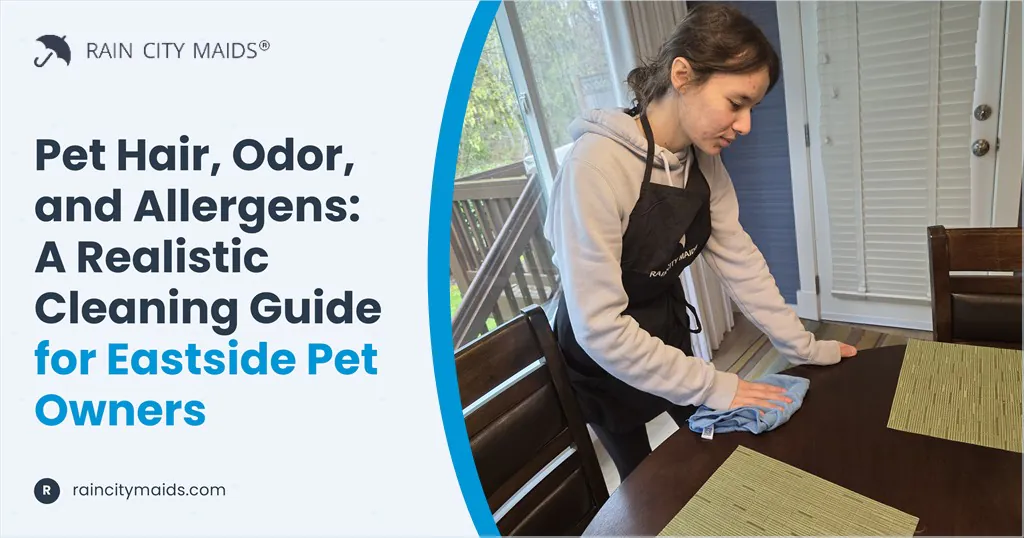
If you share your Eastside home with dogs, cats, or both, you already know that pet ownership and cleanliness exist in a constant negotiation. Pet hair finds its way into corners you didn't know existed. Odors settle into fabrics and linger even after you've cleaned. Allergens accumulate faster than you can wipe them away. And yet, your pets are family, and you want your home to feel fresh and welcoming for guests, your own health, and your peace of mind.
The good news: you don't need to choose between a clean home and a pet-friendly one. You need a realistic strategy that accounts for how pets actually live in your space, paired with the right cleaning rhythm and professional support when you need it.
Why Pet Homes Need a Different Cleaning Approach
Standard cleaning routines assume a relatively stable environment. You dust, you vacuum, things stay clean for a while. Pet homes are different. Pets shed continuously, track outdoor debris, and create odors that require active management rather than passive maintenance.
The Eastside's climate compounds this. Our damp winters mean pets spend more time indoors, and moisture amplifies odors. Spring and summer bring shedding season, when a single dog or cat can deposit enough hair in a week to fill a vacuum bag. If you have allergies or asthma, pet dander becomes a real health factor, not just a comfort issue.
This isn't a failure on your part. It's simply the reality of pet ownership. The solution isn't to clean more frantically on your own. It's to build a system that works with your life and your pet's presence.
The Daily and Weekly Habits That Actually Matter
Before we talk about professional cleaning, let's be honest about what you can realistically do between visits.
Daily habits that make the biggest difference: lint-roll high-traffic furniture (sofas, beds) once or twice a week, not daily. Sweep or vacuum the main living areas and bedrooms twice a week, focusing on where your pet spends the most time. Wipe down your pet's food and water bowls daily and the surrounding floor weekly. Open windows on dry days to air out the house, even for 15 minutes. These small actions prevent odors and hair from accumulating into a crisis.
Weekly habits: wash pet bedding if your pet has a dedicated bed. Wipe down door frames and light switches where pet nose prints and paw marks accumulate. Take out trash more frequently if you're disposing of litter or waste. Spot-clean any accidents immediately with an enzymatic cleaner, which breaks down the compounds that create lingering odor.
What you probably shouldn't do: don't try to deep-clean your entire home yourself every week. That's exhausting, unsustainable, and it's exactly why professional cleaning exists.
Where Professional Cleaning Solves the Pet Problem
A professional cleaning team can handle the tasks that accumulate fastest in pet homes and that are hardest to do alone. When you book recurring cleaning every two weeks or monthly, the team tackles the areas where pet hair and odor concentrate: baseboards (where hair collects), window sills, light fixtures, and the corners of rooms that are easy to miss. They vacuum and mop thoroughly, reaching under furniture and into crevices. They wipe down all surfaces, which removes the fine layer of dander and dust that contributes to allergens.
For pet owners, the baseboards and light fixtures matter more than you might think. Pet hair and dander settle on these surfaces and become invisible until they accumulate enough to be obvious. A professional clean that includes these details keeps allergen levels lower between your own cleaning efforts.
If your pet situation is particularly intense, a deep cleaning once or twice a year can reset your home. This includes extra attention to shower and bath areas (where pet shampoo residue can linger), dusting of light fixtures and ceiling fans (where pet dander accumulates), and wiping of doors, handles, and light switches. It's the kind of thorough reset that's hard to do on your own but makes a real difference in how your home feels.
Choosing the Right Cleaning Schedule for Your Pet Situation
The right frequency depends on how many pets you have, their size, how much they shed, and your own tolerance for pet hair and odor.
One small, low-shedding pet and a household that doesn't mind some visible hair: monthly cleaning might be enough, supplemented by your own weekly vacuuming and spot-cleaning.
One or two medium to large pets, or a household with allergies: biweekly cleaning usually works well. This keeps hair and dander from building up to levels that trigger allergies or create noticeable odor.
Multiple pets, heavy shedding, or strong odor concerns: weekly cleaning might be worth the investment. It's not excessive; it's realistic for the amount of pet-related debris your home generates.
The key is choosing a schedule you'll actually stick with, not one that feels like a luxury you can't afford. A biweekly clean that happens reliably is better than a monthly clean you keep postponing because life gets in the way.
What to Tell Your Cleaner About Your Pet
When you book with a licensed and insured cleaning company like Rain City Maids, let them know upfront about your pets. Mention the type, size, and how much they shed. Tell them if your pet has any behavioral quirks (does your dog bark at strangers? Does your cat hide?). Let them know if there are any areas where your pet spends most of their time, so the team can prioritize those zones.
A good cleaning team will adjust their approach based on this information. They'll know to pay extra attention to pet-heavy areas and to use pet-safe products if you have concerns. They'll also be prepared for the reality of cleaning a pet home, rather than treating it as a standard residential clean.
The Products and Practices That Actually Help
You don't need specialized pet-cleaning products for everything. A few targeted choices make a real difference:
- Enzymatic cleaners for accidents and odor spots. These break down the organic compounds that create pet smell, rather than just masking it.
- A good vacuum with a HEPA filter, if you have allergies. This traps fine particles like dander instead of recirculating them into the air.
- Washable, removable covers for furniture where your pet sits. You can throw these in the wash weekly, which is far easier than trying to deep-clean upholstery.
- Air purifiers in bedrooms or main living areas, especially if anyone in your household has allergies or asthma. These help manage airborne dander between cleanings.
Beyond products, the practice that matters most is consistency. A little bit of cleaning done regularly prevents the buildup that requires heroic effort later. This is why professional recurring cleaning works so well for pet owners: it creates a predictable rhythm that keeps your home from ever getting to the point where it feels overwhelming.
Pet Cleaning Across the Eastside
Whether you're in Bellevue, Kirkland, or anywhere else on the Eastside, the challenges of pet ownership are the same. Our damp climate, the prevalence of larger homes with more surface area to clean, and the fact that many Eastside families have pets all mean that pet-friendly cleaning is a real need, not a niche service.
When you're ready to bring in professional help, look for a team that understands pet homes specifically. They should ask about your pets, not treat them as an afterthought. They should be comfortable working around animals and know how to prioritize the areas where pet hair and odor concentrate.
A clean home and pet ownership aren't mutually exclusive. They just require a realistic plan and the right support. Get a quote for recurring cleaning tailored to your pet situation, and let us help you maintain the balance between a home you love and the pets you love living in it.